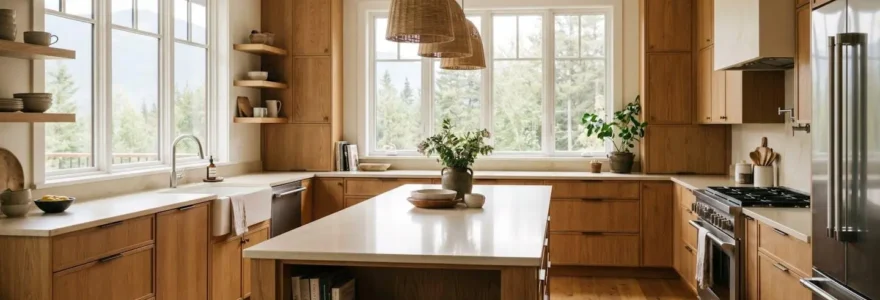
Canadian homeowners are renovating their kitchens at historic rates — 67% have taken on projects since 2020, a surge that reflects sustained appetite for residential upgrades. The all-white, sterile aesthetic that dominated those renovation cycles is giving way to warmer, more layered spaces where materials feel tactile, layouts breathe, and functionality holds its own against style. Understanding which directions are gaining real traction in 2026 — and which have staying power — is where smart renovation decisions begin.
Three directions shaping kitchen renovations right now:
- Natural materials and matte finishes are replacing high-gloss surfaces, with durability now a primary selection criterion
- Open layouts anchored by a functional island remain the dominant configuration — nearly two-thirds of renovation projects now incorporate this approach
- Integrated technology and sustainability-driven choices (certified wood, LED systems, low-VOC finishes) are moving from optional upgrades to standard expectations
Renovation decisions made today tend to hold a property for ten to fifteen years. That time horizon changes how you should read trend reports: a finish or layout that looks compelling in a magazine photo needs to prove it has staying power before it earns a spot in your budget.
The four directions below are those that industry analysts, architects, and building research bodies in Canada are tracking with the most consistency heading into 2026.
Materials and finishes: what’s replacing the all-white kitchen
The all-white kitchen had a strong run. Crisp lacquer doors, white quartz slabs, chrome hardware — the formula was reliable and photographed beautifully. What the market is now registering is fatigue. Not an outright rejection, but a recalibration toward warmth, texture, and depth.
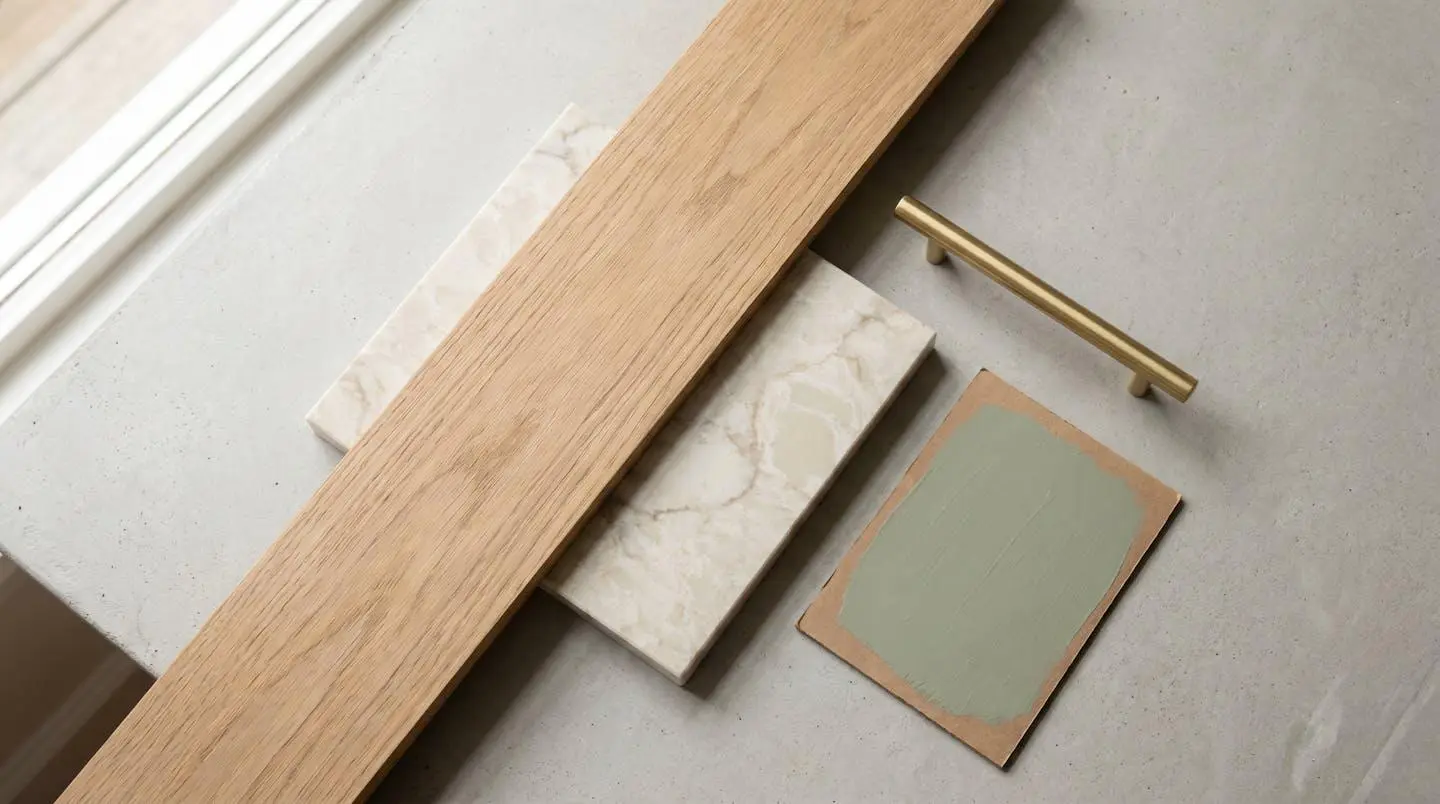
Natural wood in medium and light tones — white oak, ash, cerused finishes — is the dominant material shift. Where previous renovation cycles pushed engineered substitutes that mimicked wood from a distance, clients and designers in 2026 are choosing the real thing, or premium veneers that genuinely replicate grain variation. This preference aligns with a broader appetite for tactile kitchen surfaces: stone with visible veining, ceramic slabs with textured relief, concrete-effect porcelain.
For homeowners weighing a kitchen renovation in Ottawa — where mid-century and 1980s-era cabinetry still dominates older housing stock — the shift toward warm-toned cabinetry often delivers two benefits at once: a more current aesthetic and a more functional layout achieved through custom millwork.
67%
of homeowners renovated their kitchen since 2020, up 12 points from 2019 — a surge that reflects sustained appetite for residential kitchen upgrades
That figure, drawn from le baromètre 2025 de la CAPEB, reflects a renovation wave that hasn’t receded. The materials chosen across that wave offer a useful signal: demand is now concentrated in the mid-to-premium segment, where durability and visual coherence carry more weight than price alone.
Matte and satin finishes are displacing high-gloss across cabinetry, hardware, and faucets. The practical reasoning is sound — matte surfaces show fingerprints and minor scuffs far less than high-gloss equivalents, which matters in a working kitchen used daily. Warm metal accents (brushed brass, unlacquered bronze, satin nickel) have stabilized as the dominant hardware direction, pulling away from the cold chrome palette that characterized the previous decade.
Cas pratique : navigating a material switch
Consider a common scenario: a homeowner with a functional galley kitchen from the early 1990s — oak veneer cabinets, laminate countertop, white ceramic tile backsplash. The bones are sound; the aesthetic no longer works. A targeted renovation focusing on cabinet door replacement (painted in a warm sage or greige tone), a porcelain slab countertop in a veined limestone look, and brushed brass hardware can transform the space without touching the layout. The material selection does the heavy lifting, and the investment concentrates where visual impact is highest.
Layouts that work: the island-centered kitchen and open configurations
Layout decisions outlast finish decisions by a significant margin. A countertop can be replaced in a weekend; reconfiguring the structural relationship between kitchen and living space is a multi-week project. That asymmetry is worth keeping in mind when evaluating the open-concept and island-centered formats that now dominate renovation planning.
According to research compiled by the CSTB, open-plan kitchen configurations represented 62% of renovation projects tracked in 2025. The figure reflects both aspiration and practical demand: households that use their kitchen as a social and work space — not merely a cooking utility room — need sightlines, circulation, and acoustic flexibility that closed kitchens cannot provide.
The island functions as the operational center of this configuration. Its role has expanded considerably: what began as additional counter space has evolved into a zone that simultaneously handles prep work, casual dining, homework, and informal conversation. The most functional islands being specified today integrate concealed storage on both sides, a flush or slightly raised seating ledge on one end, and dedicated electrical access for small appliances.
-
If your kitchen is under 10 feet wide:
A traditional galley or L-shaped layout will serve better than a forced island. Prioritize deep drawers, pull-out pantry units, and a peninsula if you need social connection to the adjoining room.
-
If you have a 10–14 foot span:
A modestly sized island (roughly 36 by 72 inches) becomes viable. Ensure a minimum 42-inch clearance on all working sides — 48 inches if two people regularly cook simultaneously.
-
If the kitchen opens onto a living or dining area:
An open layout with a statement island is the most coherent choice. A statement range hood or structural arch between zones creates visual definition without reinstating the wall you removed.
-
If you are working with an existing closed layout in an older home:
Assess whether the dividing wall is load-bearing before planning. In many Ottawa-area homes built before 1985, the kitchen wall separating from the dining room is not structural — removal is feasible but requires a qualified contractor and, in some cases, a permit.
One pattern that market observers note with some regularity: homeowners who invest in opening a layout without reconfiguring the workflow triangle — the spatial relationship between refrigerator, sink, and cooktop — often find the result aesthetically improved but functionally awkward. Layout renovation is most effective when the footprint redesign and the workflow logic are addressed together rather than sequentially. For those exploring the full scope of kitchen renovation, the layout phase is where the most consequential decisions tend to get made.
Sustainability and smart integration: the quiet upgrade
Two shifts are happening simultaneously in kitchen renovation that tend to get discussed separately but are increasingly connected: the move toward environmentally credentialed materials, and the integration of low-profile smart technology. Neither is a dramatic overhaul. Both are becoming baseline expectations rather than premium differentiators.
On the sustainability side, les recommandations de l’ADEME pour une cuisine écoresponsable point consistently toward certified wood (PEFC and equivalent standards), low-carbon laminate alternatives for cabinetry carcasses, and LED lighting systems that reduce kitchen energy consumption by up to 50% compared to halogen equivalents. These are not niche choices — they are increasingly the default specification at mid-market and above.
The practical implication for renovation planning: eco-labelled cabinetry materials and certified wood components are now widely available from mainstream suppliers, not only specialty retailers. The cost premium over uncertified equivalents has narrowed considerably, which removes one of the historic barriers to specifying them.
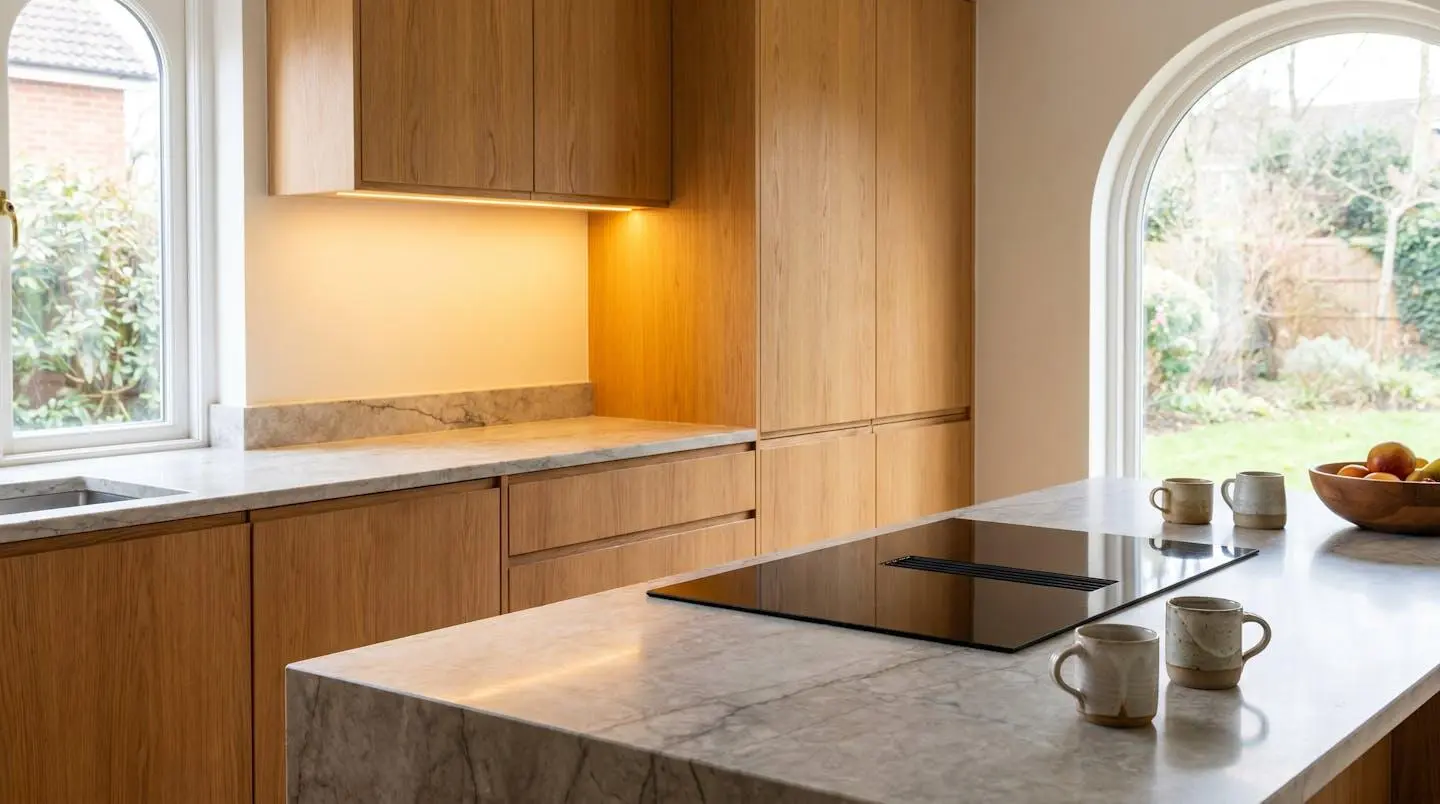
Bon à savoir : LED under-cabinet lighting — a relatively modest line item in a renovation budget — delivers one of the highest functional returns in a kitchen upgrade. It eliminates shadow zones on the countertop work surface and can be integrated with dimmer controls for ambient evening use. Low-VOC finishes for cabinet interiors are increasingly available without price premium and contribute meaningfully to indoor air quality, particularly relevant in well-insulated Canadian homes where ventilation rates are lower.
Smart technology integration in kitchens is evolving away from conspicuous gadgetry. The features gaining genuine adoption are those that disappear into the background: USB-C and wireless charging integrated into island countertop surfaces, motion-sensor under-cabinet lighting, and refrigerator units with basic inventory management. Voice-controlled appliances are present in the market but lag in actual renovation uptake — the friction of daily use in a busy household tends to outweigh the convenience proposition for most buyers at this stage.
What is being consistently specified — and what contractors report receiving client requests for — is improved kitchen ventilation connected to smart controls, and induction cooktops replacing gas in renovation projects. The latter shift is partly aesthetic (induction surfaces are flush and easier to clean), partly practical (precise temperature control), and partly driven by updated energy efficiency considerations in new and renovated Canadian residential construction.
Translating trends into decisions before you call a contractor
Trend awareness is useful insofar as it helps filter options and anchor decisions. The risk is the opposite dynamic: absorbing too many directions from too many sources until the project stalls under the weight of competing priorities. The following orientation is designed to cut through that.
The trends covered above share a common logic: they reward permanence over novelty. Warm natural materials age better than high-gloss synthetics. An open layout configured around a functional island serves a household for fifteen years regardless of what color palettes are trending. Certified materials and LED systems reduce operating costs over time. Smart integrations that genuinely reduce friction in daily kitchen use have a demonstrably longer lifespan than features that require deliberate engagement to activate.
When evaluating which elements belong in your renovation scope, the most useful filter is not “is this trending in 2026” but rather “does this solve a friction point I encounter in my kitchen every week.” Insufficient counter space, poor lighting over the work surface, dead storage zones, and inadequate ventilation are the four problems that renovation professionals encounter with the highest frequency in Canadian homes. A renovation that addresses those four — regardless of aesthetic direction — delivers more lasting value than one that chases visual trends without solving functional gaps.
Are warm wood tones a passing trend or a durable direction?
Natural wood and warm-toned cabinetry have historical precedent going back several decades before the all-white era. The current cycle is a return to a material logic that proved durable previously, not an experimental direction. White kitchens will remain a valid aesthetic choice; warm wood adds depth and ages more gracefully.
Do open-concept layouts work in smaller homes?
Not always. In homes under roughly 1,200 square feet, removing a kitchen wall can create a layout that feels exposed rather than open. A peninsula configuration — which maintains partial visual separation while connecting the kitchen to adjacent living space — often performs better in smaller footprints than a fully open plan.
Is sustainable kitchen renovation significantly more expensive?
The cost differential has narrowed. Certified wood materials and low-VOC finishes are now available at mainstream price points. LED lighting systems carry a modest upfront premium that is typically recovered through reduced energy costs within two to three years. The ADEME’s guidance on eco-responsible kitchen renovation explicitly notes that durable, certified material choices often outperform cheaper uncertified alternatives over a ten-year horizon.
How much should a kitchen renovation budget for in Ottawa?
Budget ranges vary significantly based on scope, materials, and whether the layout is being reconfigured. Industry data indicates that mid-range kitchen renovations (excluding major appliances) averaged around 8,500 € equivalent in France in 2025 — Canadian figures follow comparable patterns adjusted for local labour and material costs. A qualified local contractor with transparent quoting practices is the most reliable way to anchor a realistic budget to your specific project.
The question of which renovations return value at resale is one that comes up consistently at the planning stage. The honest answer is that kitchens remain one of the strongest categories for return on renovation investment in Canadian residential real estate — but the return is not uniform across all choices. Functional upgrades with lasting material quality outperform trend-chasing renovations almost without exception.
Before you move forward
-
Identify the three functional friction points you encounter most often in your current kitchen — these define your renovation priorities before aesthetics enter the conversation
-
Confirm whether your layout change involves a load-bearing wall — this single fact determines your permit requirements and structural costs before any design decisions are made
-
Request material certifications (PEFC or equivalent) from your cabinetry supplier at the quote stage — not after selection — to avoid substitution friction mid-project
-
Specify LED under-cabinet lighting and island electrical access in your contractor brief from the outset — retrofitting these after cabinetry installation costs significantly more than pre-planning them
Renovation projects that begin with a clear-eyed assessment of what isn’t working — rather than a mood board — tend to produce kitchens that hold their value and their appeal past the initial enthusiasm. The trends outlined here are directional signals worth understanding; the decisions that matter most are the ones calibrated to your specific space, household, and timeline. For a more detailed look at the méthodes de modernisation de votre cuisine, the next step is translating these directions into a project scope with real dimensions and a realistic budget.